Outsiders, Autonomy, and the Witch: A conversation with Shirley Archibald
Shirley Archibald was our artist in residence from 5th May - 2nd June 2025. Our writer in residence, Ashleigh Sean Rolle caught up with her for a conversation.
Shirley’s work is spiritual. A bold statement to make I know. Spirituality tends to get the reputation of being unreal or unserious but, how else does one describe it? The excavation of earth on which women lost their lives to patriarchal terror imposed on them by being labeled “witch”.
Shirley’s work is grounded in feminist theory and neurodiverse ways of thinking. Her work has a deeply embodied relationship to land drawing extensively from histories of women persecuted across time. She draws on these stories as living continuums rather than distant pasts. Looking at the way these lived experiences have shaped women’s bodies and our autonomy.
“I suppose, obviously looking at the prosecution of witches, researching The Caliban and the Witch, Silvia Federici, and talking about the transition to capitalist society and the loss of bodily autonomy—it’s huge thinking about that.”
Consistently, Shirley returns again and again to the thought of “who were these women?”
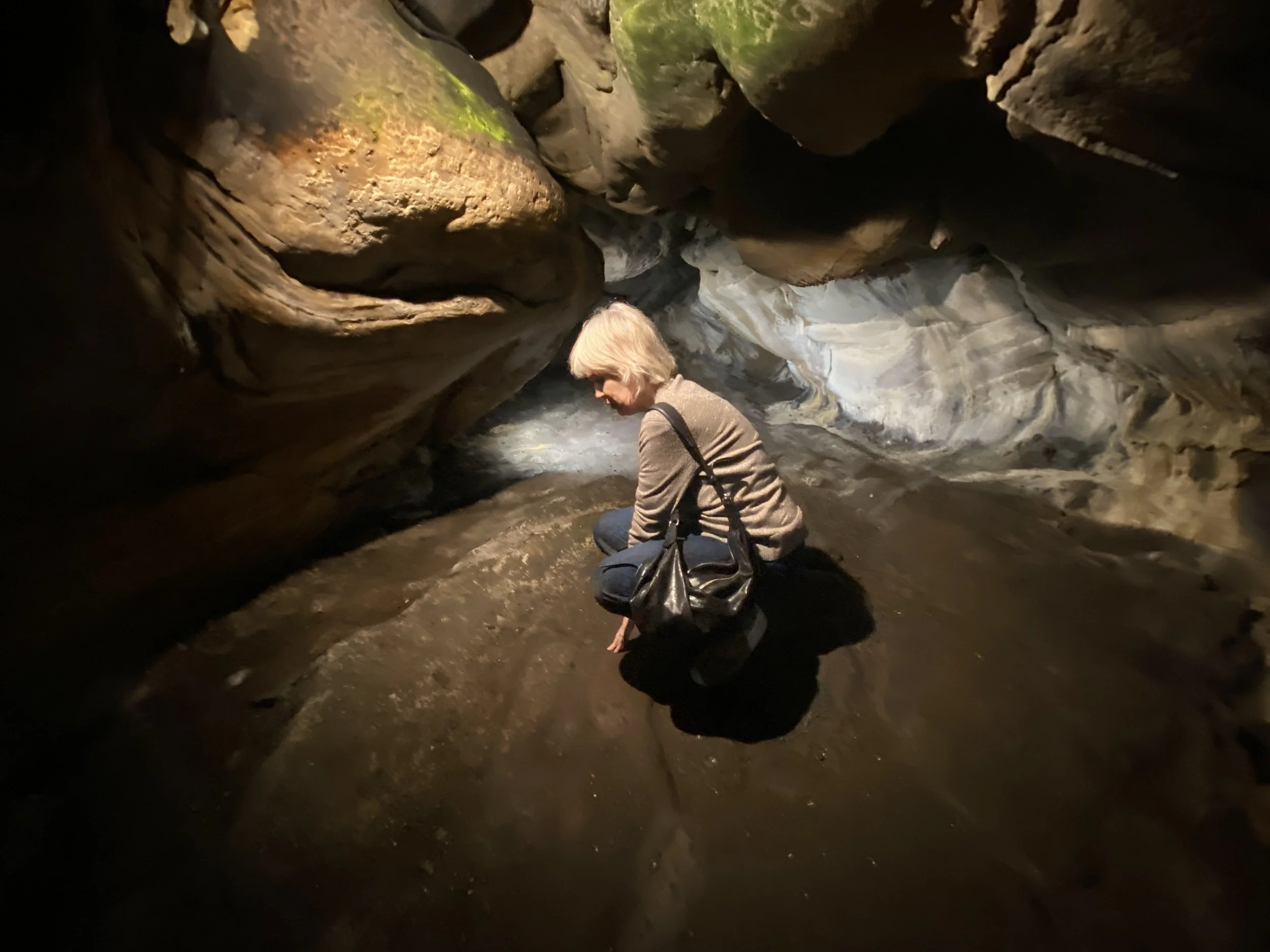
Field work - St Fillan’s Cave, Pittenweem, Scotland 2025
“What I’ve done in terms of being feminist, neurodiverse, and queer is kind of like looking at the actual women who were accused of witchcraft and seeing who were these people. Sometimes women were accused because they had red hair or they had moles or a third nipple… but obviously there was a lot of single women that were targeted as well. There’s a good chance that these women could have been queer… They're sort of outsiders as well. That’s kind of what I’m looking at… outsiders who could be neurodiverse as well.”
Shirley is neurodiverse. She doesn’t shy away from this fact and in many ways it acts as a super power that charges her non linearly through research paths that eventually end up where her projects need her to.
“In terms of neurodiversity, the way that I work and research-wise, I’m all over the place. I’m kind of interested in how everything fits together, all the connections between things.”
She reminds me of myself in that way. Constantly feeling my own way through rabbit holes wondering if I’ve made a mistake or if I’m too far gone. How far down the path should I really go?
“I do go down a lot of rabbit holes, but actually what happens is sometimes I’ll be creating something and then later I remember a little bit of research and I’ll come back to it and go, ‘Oh yeah, this is perfect.’”
The way she describes it— this method of return, of memory simply resurfacing mid process in a way parallels how history reappears in her work. More pointedly through ideas of retrospective justice and intergenerational healing. While she was studying her MA a contemporary political gesture became a flickering pulse point.
“When I was doing my MA Fine Art at the University of Brighton, I came across a news article where the Scottish government had pardoned the witches of 16th- and 17th-century Scotland…It piqued my interest. I liked the idea of them being retrospectively pardoned”
These acts of pardoning for Shirley aren’t important because they erase harm, they’re important because they’re being acknowledged. In a world where the families of these women have long been gone, where their names will never be uttered where many of their names have not even been recorded, an acknowledgement of the bitter hand that man has dealt them is important to the reclamation of the places they were laid to rest and hopefully in some way can rest in peace.
“I think it’s quite a good thing as long as people don’t forget what actually happened. There can be some sort of healing on a sort of intergenerational level, emotional resonance. That is kind of what I’m doing in a way… it’s about a sense of hope as well.”
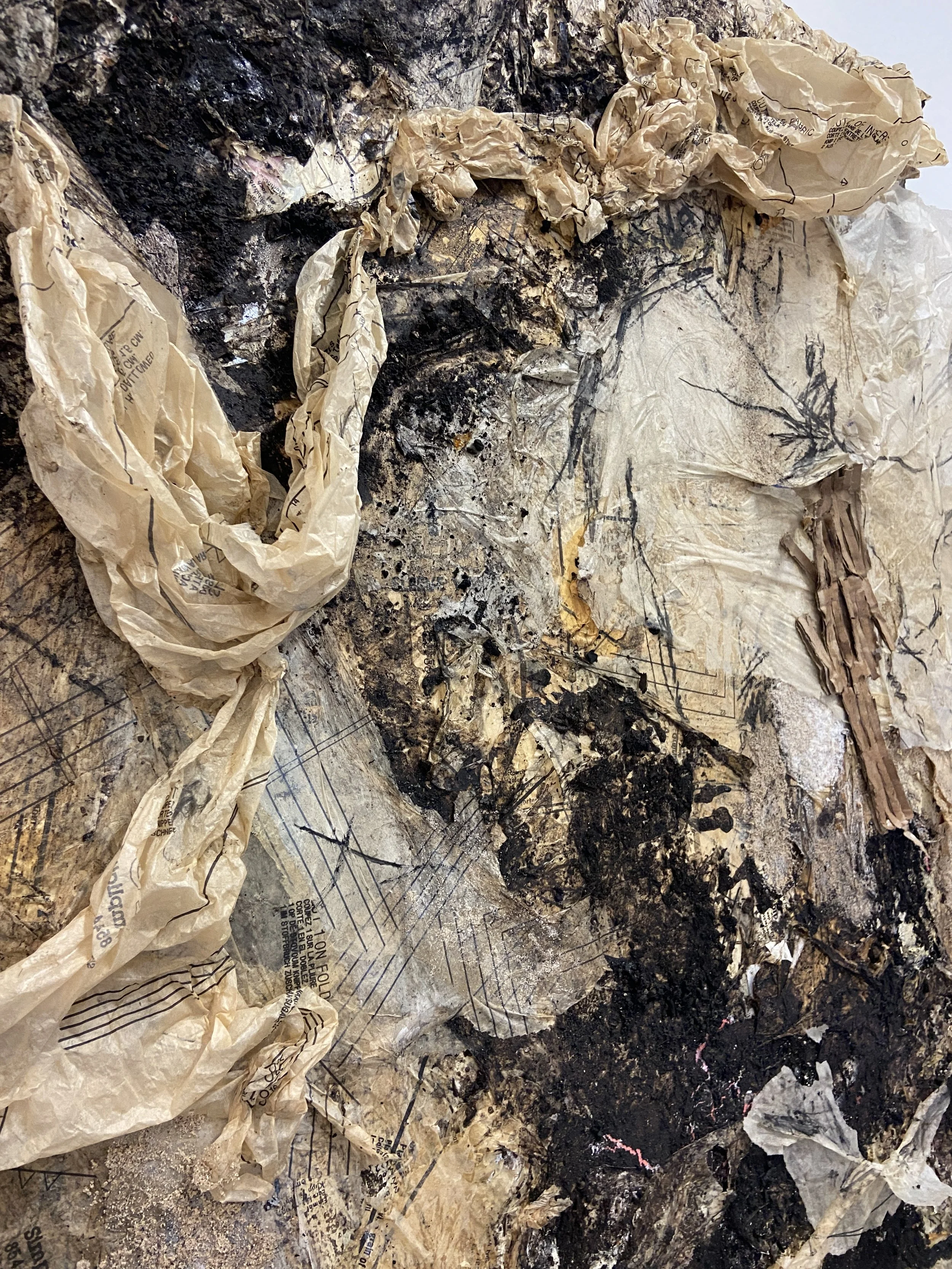
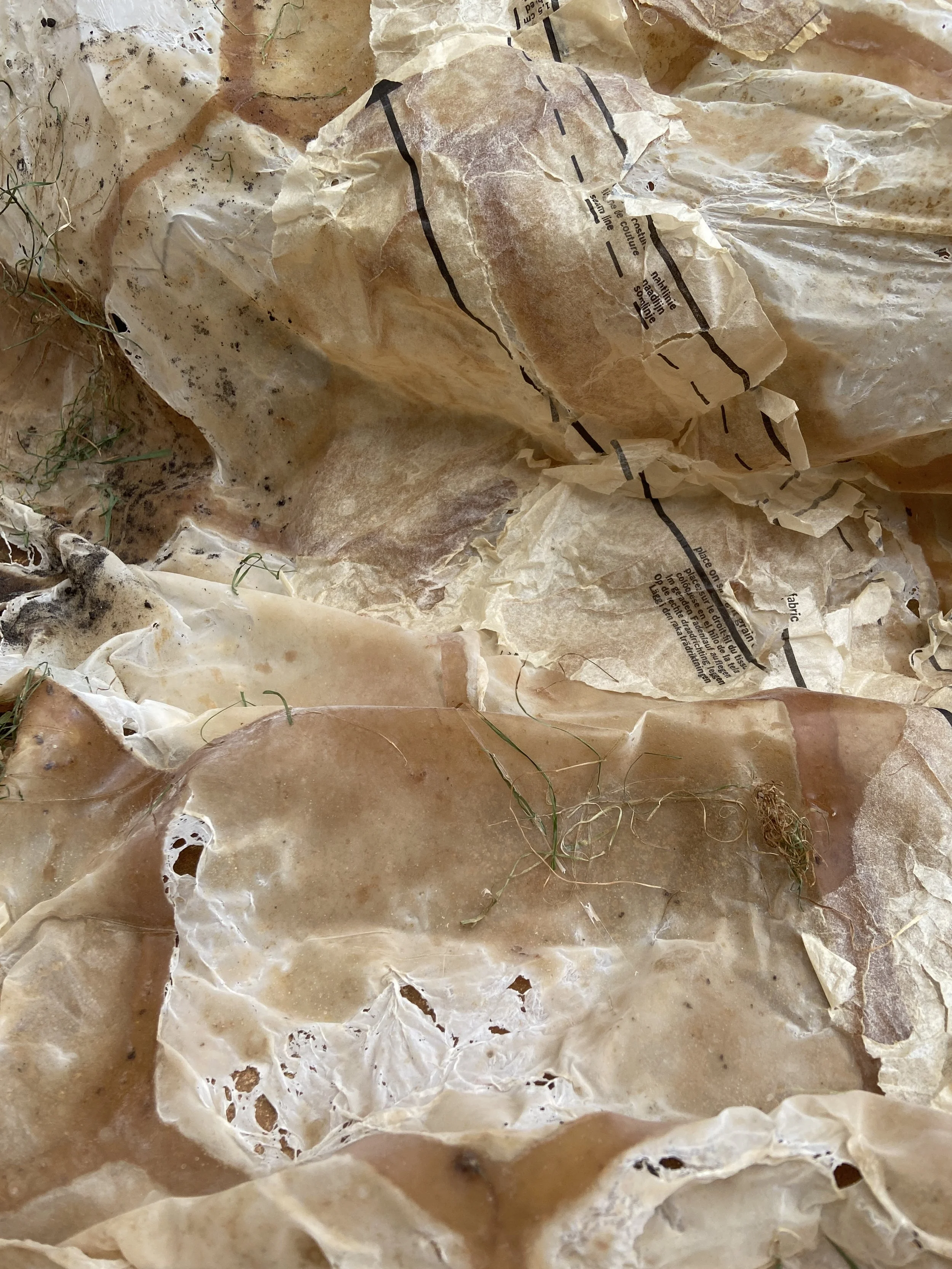
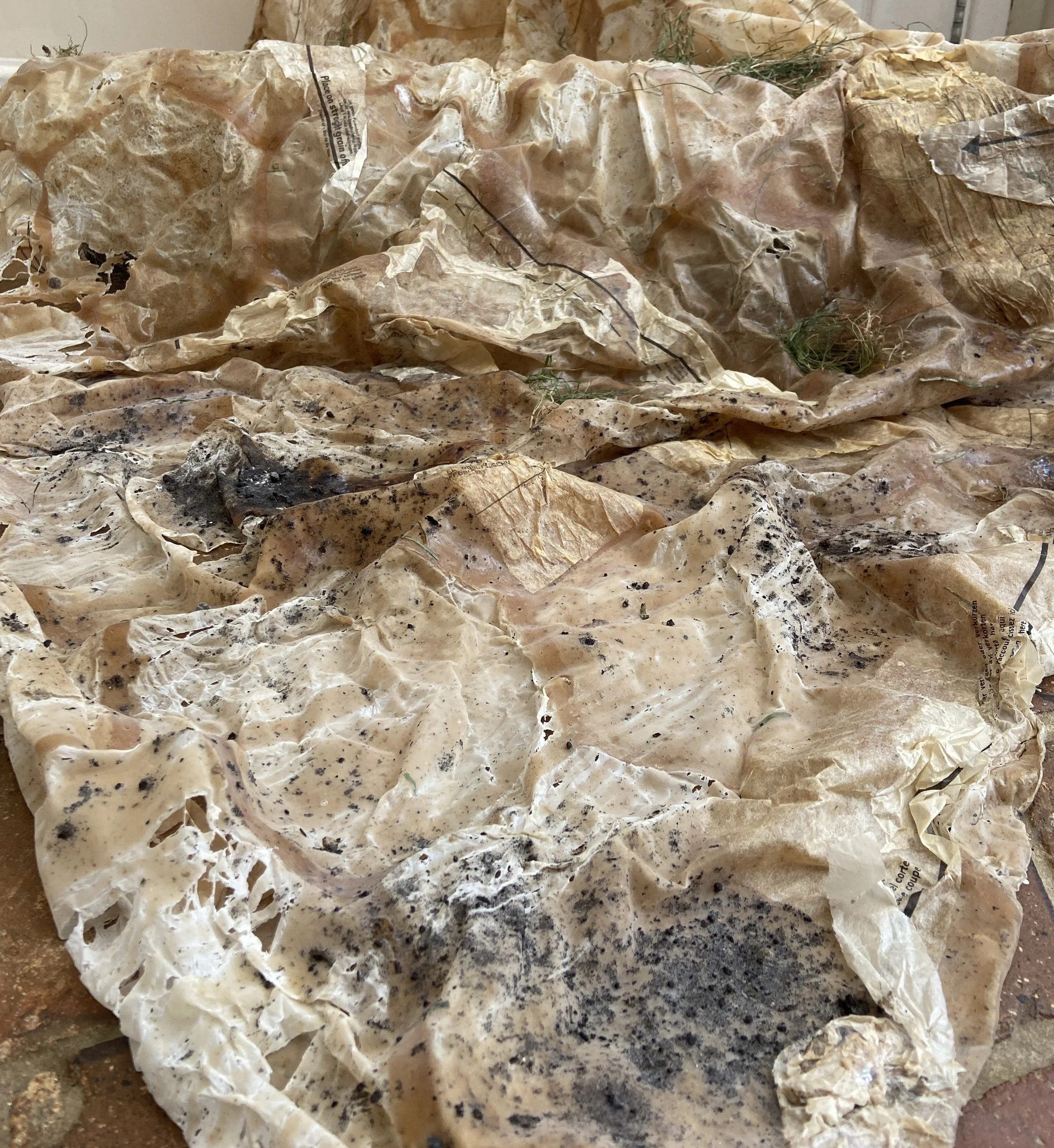
Discourse With the Devil in the Form of a Crow and Cat’ . Shirley Archibald. 2025
Shirley often works with material that offers emotional and historical weight. Objects that carry personal memory and gendered expectation, like vintage sewing patterns for example.
“They were the exact Simplicity patterns my mother used to use to make me dresses in the 1970s….I really didn’t want to wear them. I wanted to wear trouser suits…For me, they became this kind of symbol of control… patriarchal control. So I’ve been manipulating them, sculpting with them, tearing them, subverting them, to gain autonomy.”
As time went on these patterns began to resemble landscapes guiding Shirley to work with soil making earth both material and witness to the art in play.
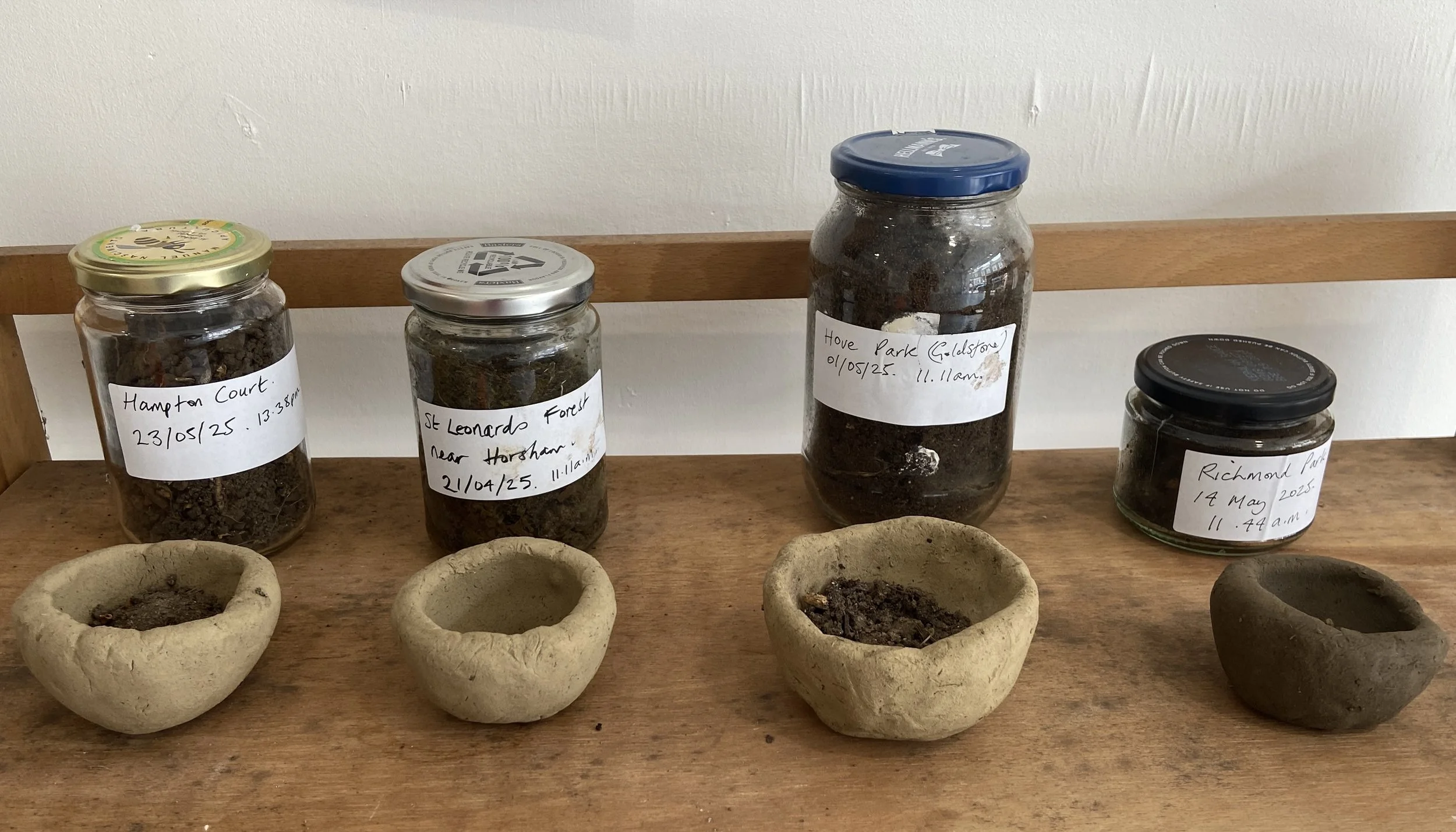
“I had this image of a woman being splashed with mud by a cart. That became the reason I started using earth. I decided to go and collect earth from the site where witches were convicted of witchcraft and use them in paintings and assemblages. It felt like a pilgrimage.”
The soil she collects, she fondly refers to as “earth capsules” and within these capsules Shirley recognised unexpected changes.
“I keep them in jars and they’re turning into little mini ecologies. I didn’t mean that to happen, but it happened.”
From the sites of great devastation, Shirley holds within her hands the very duality of life— destruction and renewal all battling at once in a jar like a form of alchemy.
“This earth where all of this awful, horrific stuff happened to these women.. it feels like some kind of regeneration or transformation is happening.”
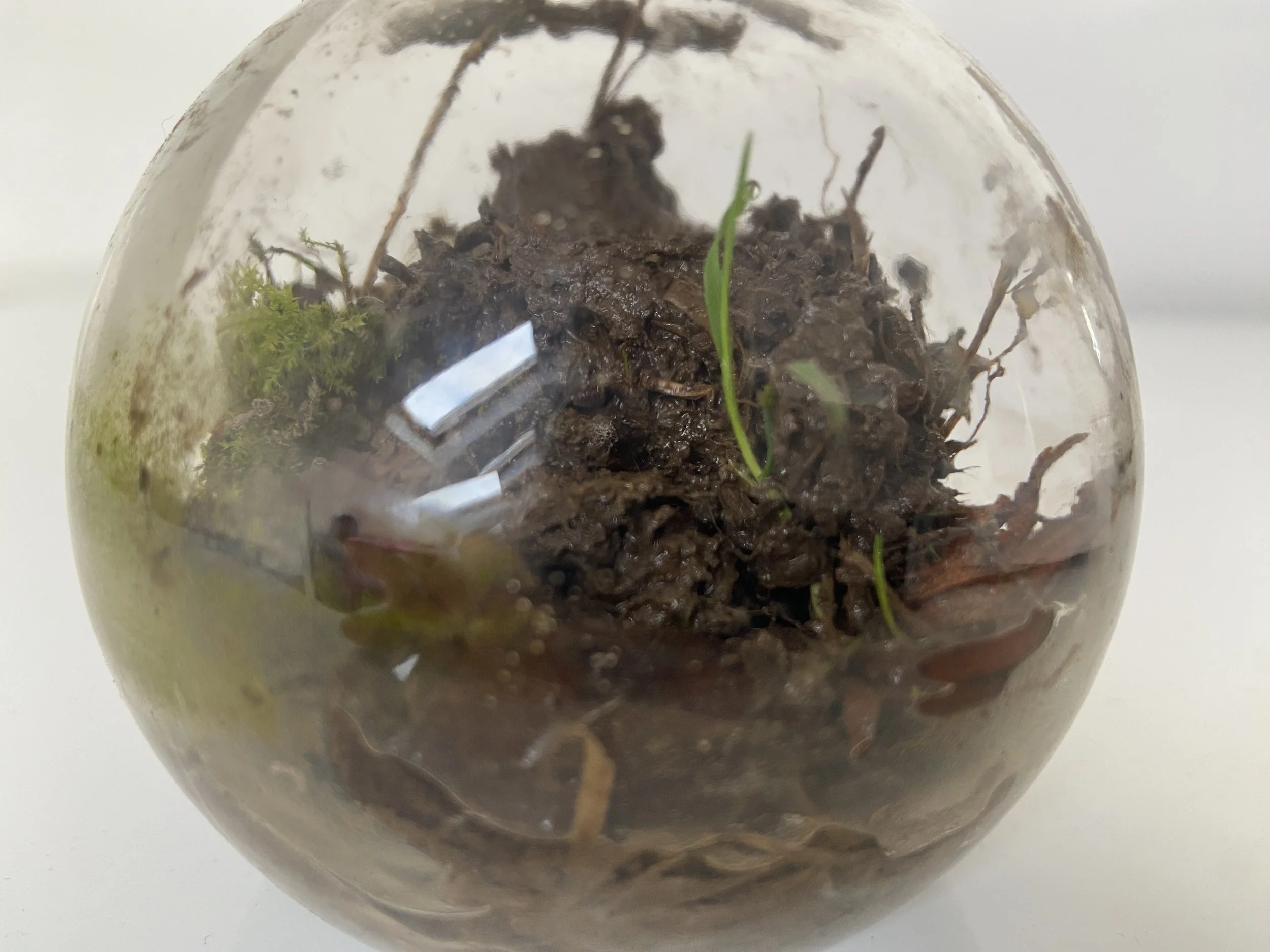
‘Earth Capsule’ Open Studios Rupture residency May 2025
This, I feel, is where the spiritual manifests itself. Where it quietly yet insistently emerges through these varying processes of exploration and excavation. During a time of global instability, Shirley softly yet openly speaks about how grounding the land can be.
“I do really feel like my work is spiritual. Earth is so potent. I love the forest… entropy and things changing… and the constancy of the earth. With everything that’s going on at the moment, it feels like it’s the only thing that feels sane and constant.”
Shirley’s current work speaks to this. She continues to explore themes surrounding myths, aging and the figure of the wild woman— the hag.
“I’m interested in the resurrection of the wild woman.I’ve been looking at the stigma of aging… it’s continued because it’s still very relevant.”
Rooted in connection. Connection that spans between past, present and future. A connection that links body and land and does not dismiss harm and healing, this is where you will find the crux of Shirley’s work.
The quiet artist, with an empathy for women she will only know in spirit and thought, continues on her work of a very rebellious nature.
A witch, in the fondest of terms, is what I deem her.
Work in progress